Yarn Count Explained: What 20/1 Means and Why It Matters for Socks
Mikayil Hajiyev
The short answer
- Yarn count tells you how thick a yarn is. Cotton uses the English count (Ne): the higher the number, the finer the yarn.
- 20/1 means a Ne 20 yarn, single ply. 30/2 means two Ne 30 strands twisted together.
- Combed cotton has the short fibres brushed out, so it's smoother, stronger and pills less than ordinary (carded) cotton.
- A higher count isn't automatically "better": finer yarn makes a smoother, thinner sock; thicker yarn makes a softer, warmer one.
Sock labels and product pages love numbers: 20/1, 30/2, 200 needles. They do mean something, and once you know how to read them you can tell a lot about how a sock will feel before you buy it. Here's the plain-English version.
What is yarn count?
Yarn count is a measure of how thick or fine a yarn is. For cotton, the standard is the English cotton count, written Ne. It's defined as the number of 840-yard lengths (called hanks) of yarn that together weigh one pound.
That definition has a counter-intuitive result: because a finer yarn is lighter, you need more hanks to make up a pound. So a higher Ne number means a finer, thinner yarn, and a lower number means a thicker one.

How to read 20/1, 30/1 and 30/2
| Written as | What it means | How it feels in a sock |
|---|---|---|
| 20/1 | Ne 20, one strand | Soft with some body; a comfortable everyday sock |
| 30/1 | Ne 30, one strand (finer) | Thinner and smoother; lighter on the foot |
| 30/2 | Two Ne 30 strands twisted together | Roughly as thick as a single Ne 15, but stronger and more even |
| 40/1+ | Very fine single yarn | Silky, thin dress socks |
You'll sometimes see the same idea written with a colon ("20:1"), but the correct notation is with a slash: 20/1. The first number is the count; the second is the number of plies twisted together. Our guide to twist and ply explains why ply matters.
Combed, carded and mercerised cotton
Count tells you thickness. How the cotton was prepared tells you about quality:
- Carded cotton is cleaned and aligned, but keeps a mix of long and short fibres. It's cheaper and a little fuzzier.
- Combed cotton goes through an extra step that combs out the short fibres. The yarn is smoother, stronger for its thickness, and less prone to bobbling. It's the one to look for in everyday socks.
- Mercerised cotton is treated so it becomes smoother, more lustrous and holds dye well. It's common in fine dress socks.
Why the best cotton socks aren't 100% cotton
"100 percent cotton socks" sounds ideal, but pure cotton has almost no stretch and doesn't recover its shape well, so 100% cotton socks tend to sag at the ankle and slip down. Most good cotton socks are a blend:
- Cotton (usually 70–85%) for softness and breathability.
- Polyamide or nylon for strength, especially at the heel and toe.
- Elastane (2–5%) so the sock hugs your foot and springs back after washing.
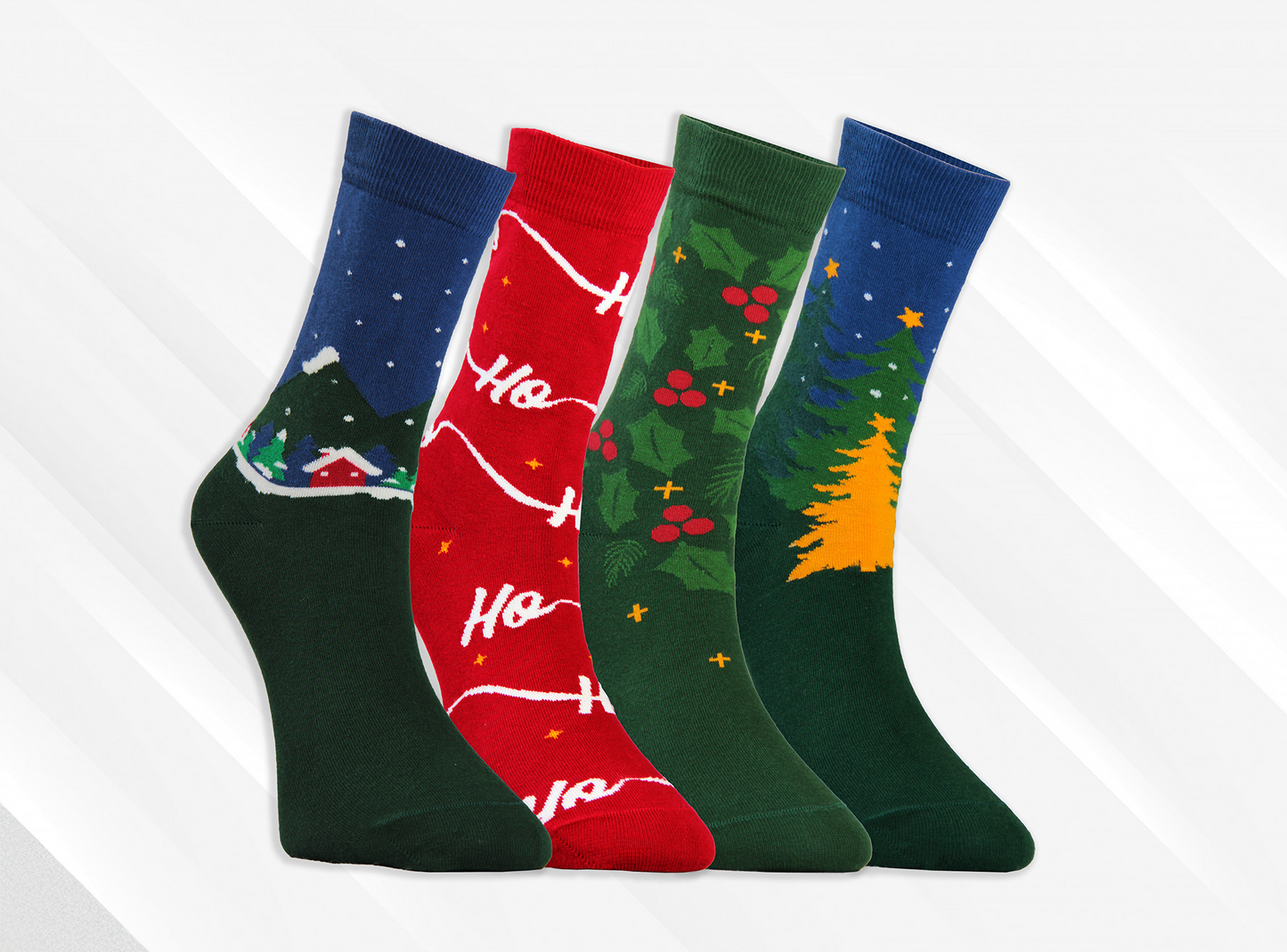
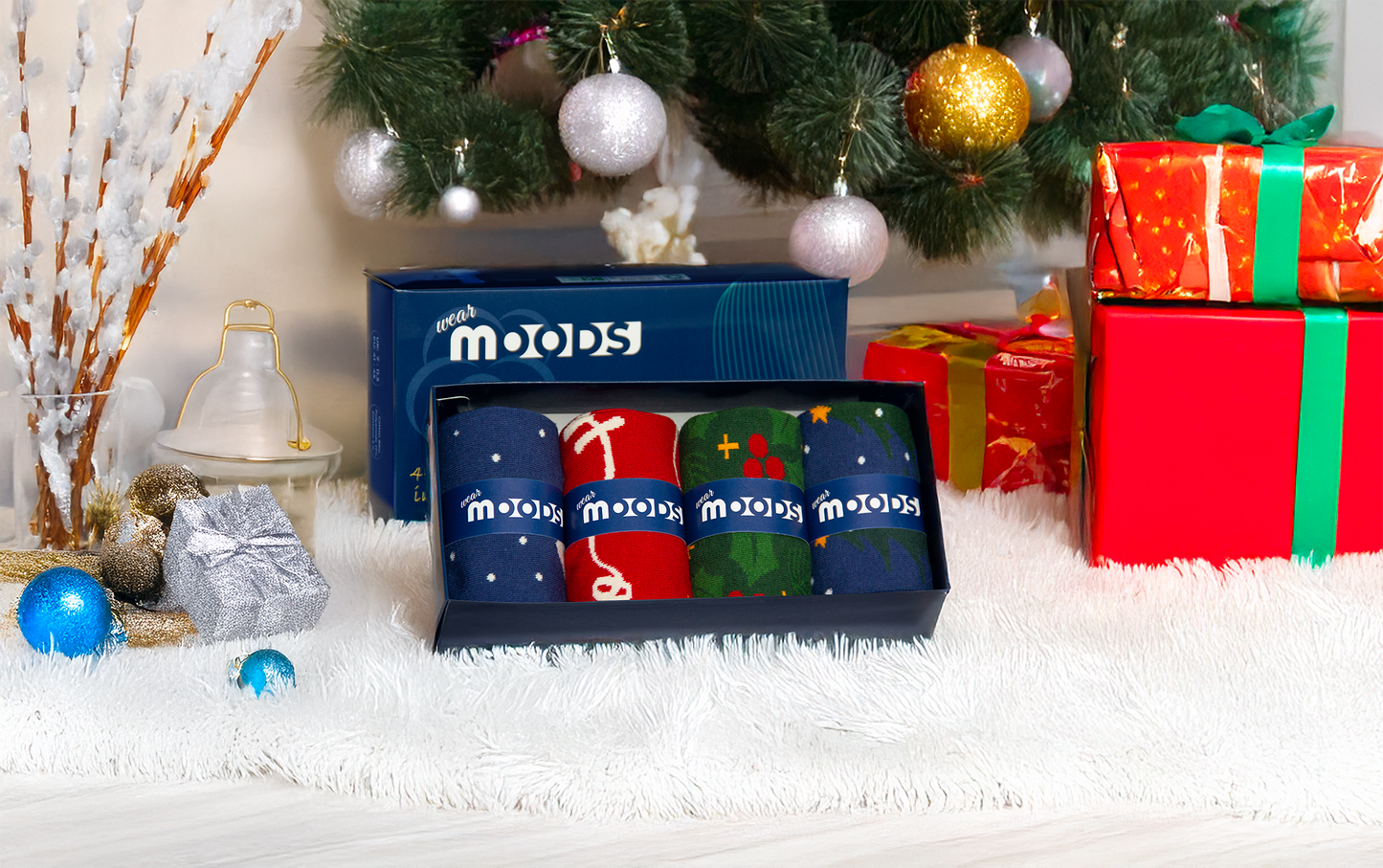
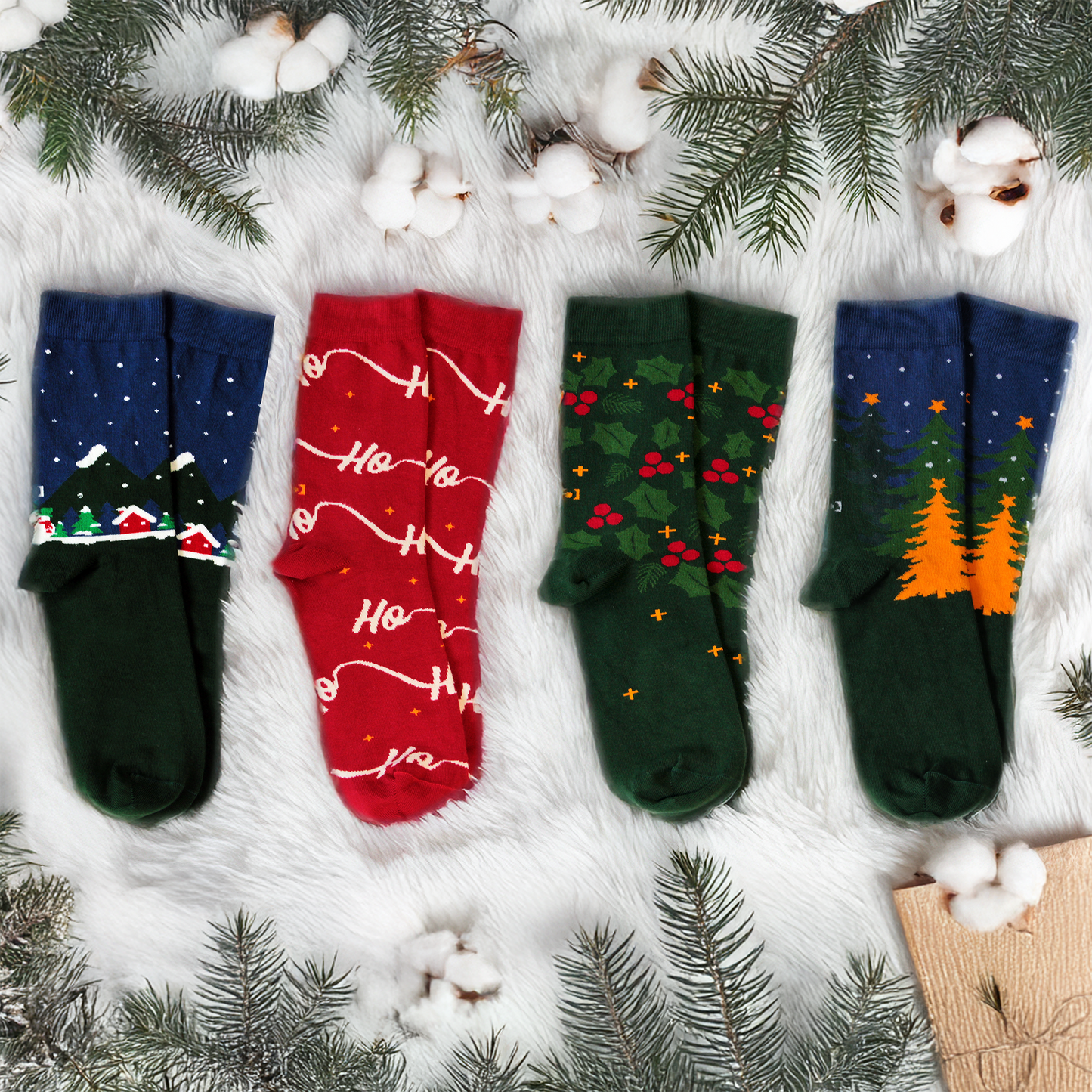
Our Christmas socks, for example, are 80% combed cotton, 17% polyamide and 3% elastane, and like every WearMoods sock they're knitted from 20/1 combed cotton yarn: a medium count that gives a soft sock with enough body to feel warm in winter.
Yarn count and needle count: two different numbers
Don't confuse yarn count with needle count. Needle count is the number of needles in the knitting machine's cylinder. More needles on the same size cylinder means smaller stitches and a denser, finer knit. Fine yarn needs a high needle count to make a sock that isn't see-through; thick yarn needs fewer needles. Our Simply Black socks are 20/1 combed cotton knitted on a 200-needle machine, which gives a smooth, dense knit that sits neatly inside shoes.
What this means when you're buying socks
- For everyday comfort and warmth: a combed cotton blend around Ne 20 is a good balance of softness and body.
- For dress shoes and warm offices: finer yarns (Ne 30 and up) or mercerised cotton make thinner, smoother socks.
- For durability: look for combed or two-ply yarns, plus polyamide in the blend.
- Ignore vague words like "premium" or "luxury" unless the label backs them up with the fibre mix and yarn type.
Want the full checklist? See how to tell good quality socks.
Frequently asked questions
Is a higher yarn count better for socks?
Not automatically. A higher count makes a finer, smoother, thinner sock, which is ideal for dress shoes. A lower count makes a thicker, warmer sock with more cushioning. "Better" depends on what you'll wear them with.
What does 20/1 mean on socks?
It means the cotton yarn is Ne 20 (a medium count) and single ply: one strand rather than two twisted together.
What is combed cotton?
Cotton that has had its short fibres combed out before spinning. It makes a smoother, stronger yarn that pills less.
Are 100% cotton socks good?
They feel soft at first but tend to lose their shape. A cotton blend with a little polyamide and elastane fits better and lasts longer.
More sock know-how
- Twist and ply: how yarn construction affects your socks
- How socks are made, step by step
- Sock thickness explained: which socks for which shoes
- How to tell good quality socks
- Sock size guide
Shop our Christmas socks or the sock gift boxes.