How Socks Are Made: From Yarn to Finished Pair in 7 Steps
Mikayil Hajiyev
The short answer
Most socks are knitted as a single tube, heel and toe on a circular sock-knitting machine. The open toe is then sewn or linked shut, the socks are washed and boarded (heat-set on foot-shaped forms), then paired and packed. Patterned socks like ours are knitted from yarn that's already dyed, with the design built into the knit.
A sock looks simple, but a lot happens between a cone of yarn and the pair in your drawer. Knowing the steps also tells you what to look for when you're choosing socks: most of the differences you can feel come from decisions made at one of these stages.

1. Choosing (and dyeing) the yarn
Everything starts with the yarn. A typical everyday sock combines a main fibre (often cotton, sometimes wool or bamboo viscose) with polyamide or nylon for strength and a small amount of elastane for stretch. The yarn's thickness, or yarn count, and how it's spun and plied decide how soft, smooth and durable the finished sock will be.
For patterned socks, the colours are dyed into the yarn before knitting. The pattern isn't printed on afterwards: it's knitted in, which is why a good patterned sock looks the same on the inside (as floats of coloured yarn) and doesn't crack or fade like a print.
2. Knitting on a circular machine
Sock machines knit in a circle, producing a seamless tube. As the machine works, it changes stitch patterns to shape the cuff, leg, heel and foot, and switches between coloured yarns to create the design (a technique called jacquard knitting). Two numbers matter here:
- Needle count: how many needles are in the machine's cylinder. More needles on the same size cylinder give smaller stitches and a finer, denser knit.
- Heel construction: a shaped heel pocket helps the sock sit properly on your foot instead of twisting round.
The sock comes off the machine with the toe still open.
3. Closing the toe
The open toe is then closed. There are two main ways:
| Method | How it works | What you notice |
|---|---|---|
| Machine-sewn | The toe is overlocked shut, leaving a small ridge | Fast and common; the seam can be felt across the toes |
| Linked | The toe stitches are joined loop to loop | A flatter seam that's barely noticeable |
Turn a sock inside out to check: a thick ridge across the toe is the most common cause of rubbing.
4. Washing and softening
Freshly knitted socks are washed to remove spinning and knitting oils, and often treated with a softener. This relaxes the knit and gives the sock its final feel.
5. Boarding
Each sock is pulled onto a flat, foot-shaped board and heat-set. This "boarding" fixes the shape so the heel and toe sit in the right place, and gives the sock its neat, flat look in the packet.
6. Pairing and checking
Socks are matched into pairs, which matters most for patterned designs, and checked for faults such as dropped stitches, holes or mismatched sizes.
7. Labelling and packing
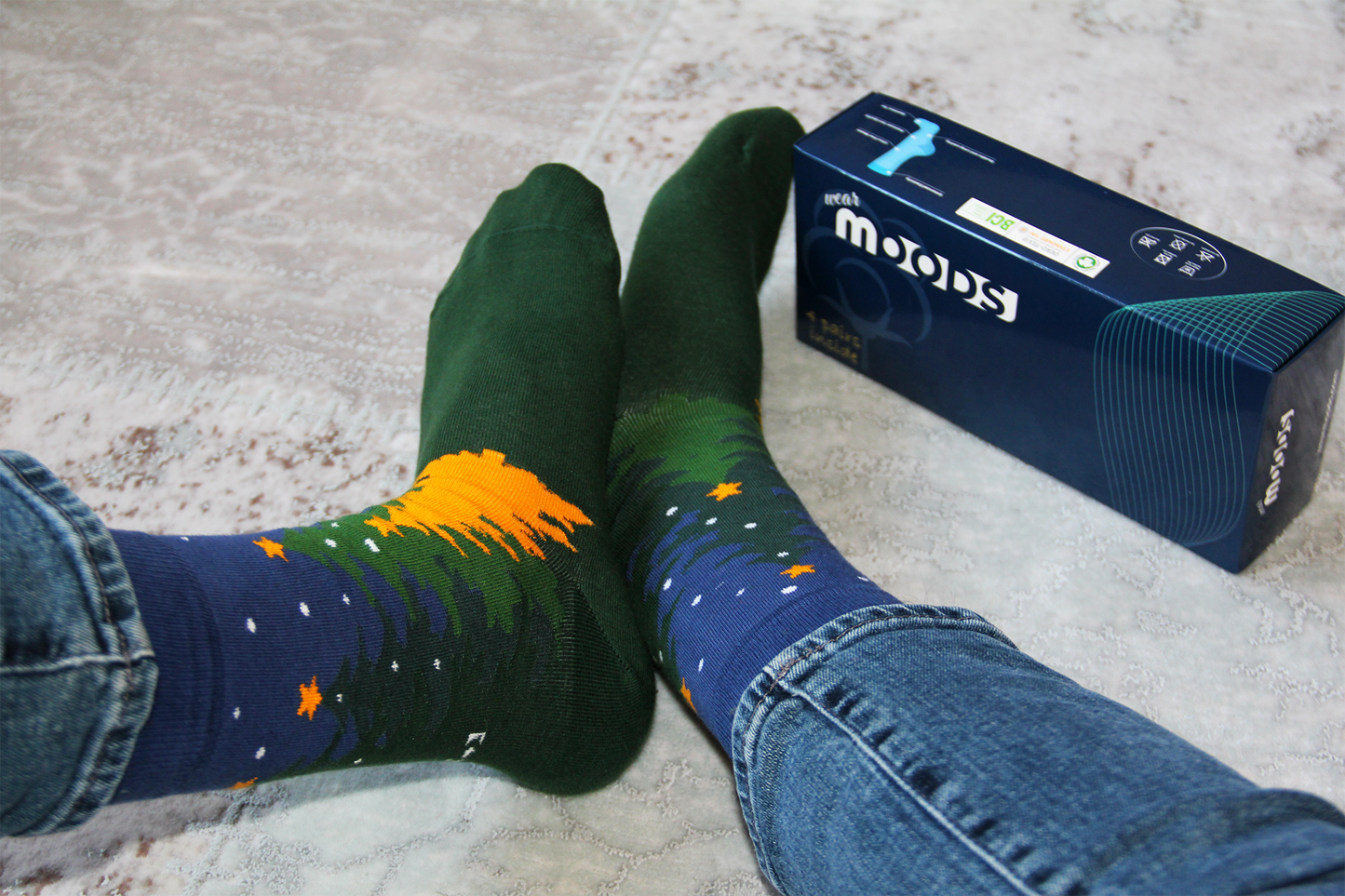
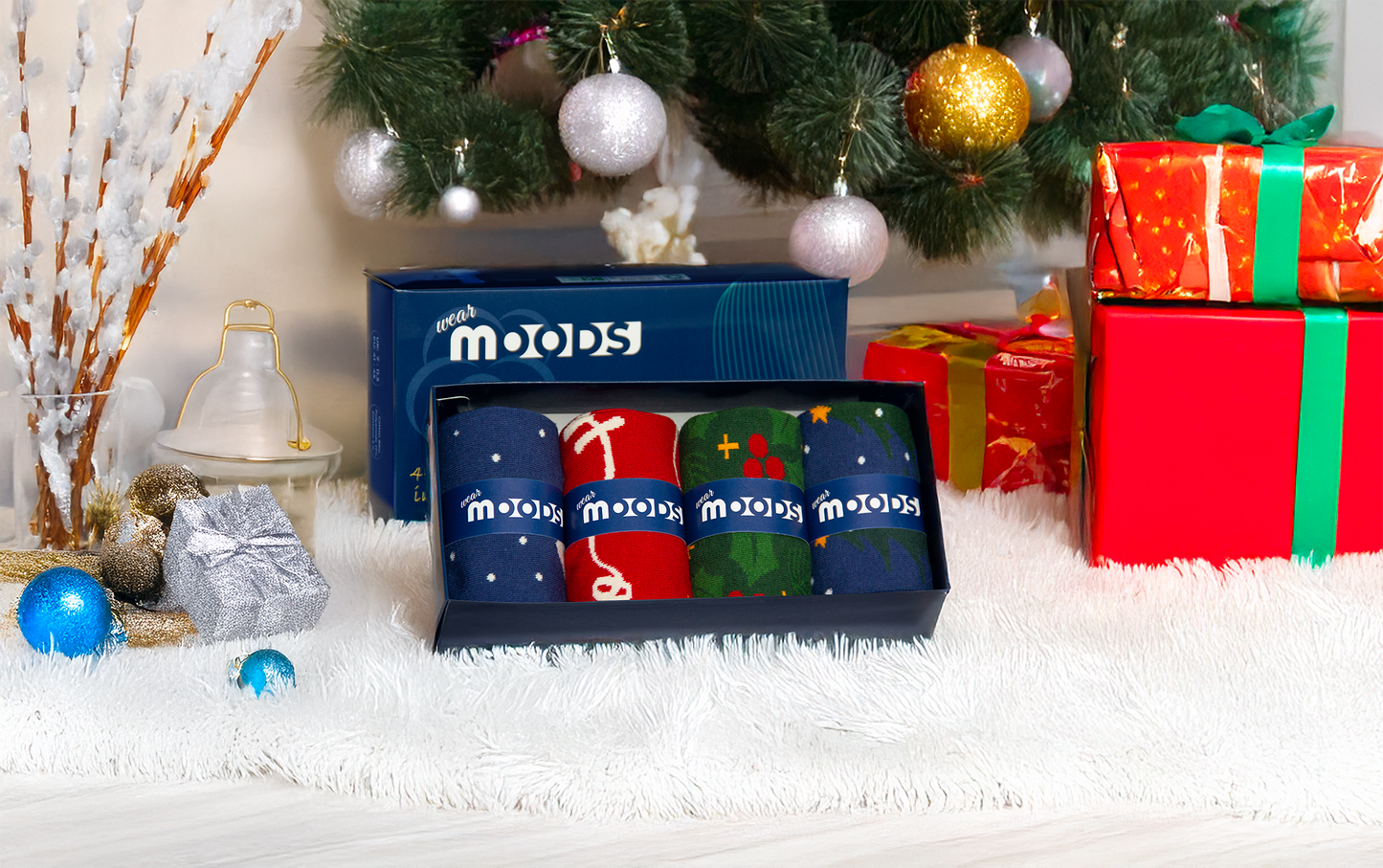
Finally, pairs are labelled, banded or folded, and packed. Our socks are rolled, banded and boxed, which is why our sock gift boxes can be handed over without wrapping.
How WearMoods socks are made
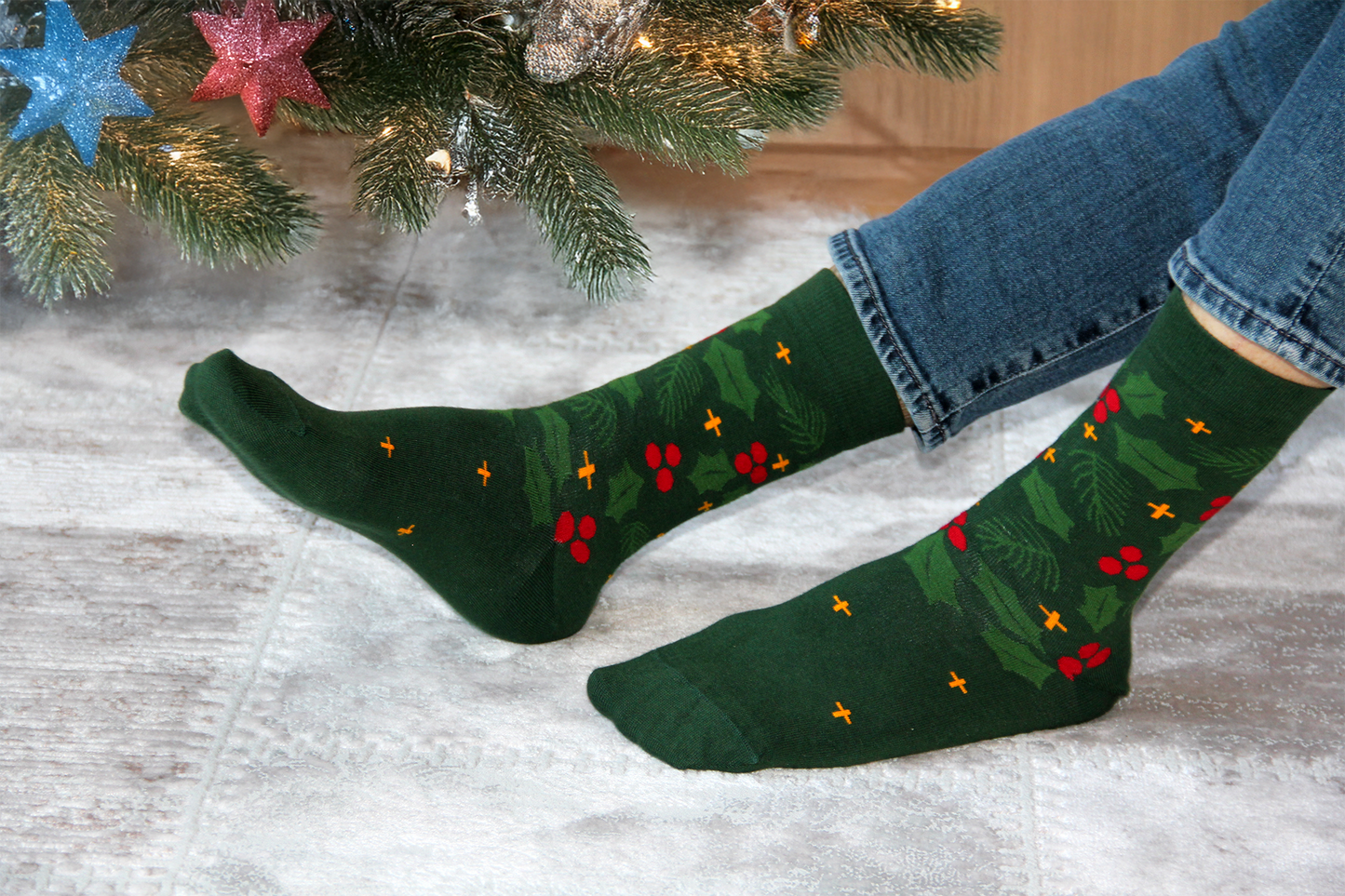
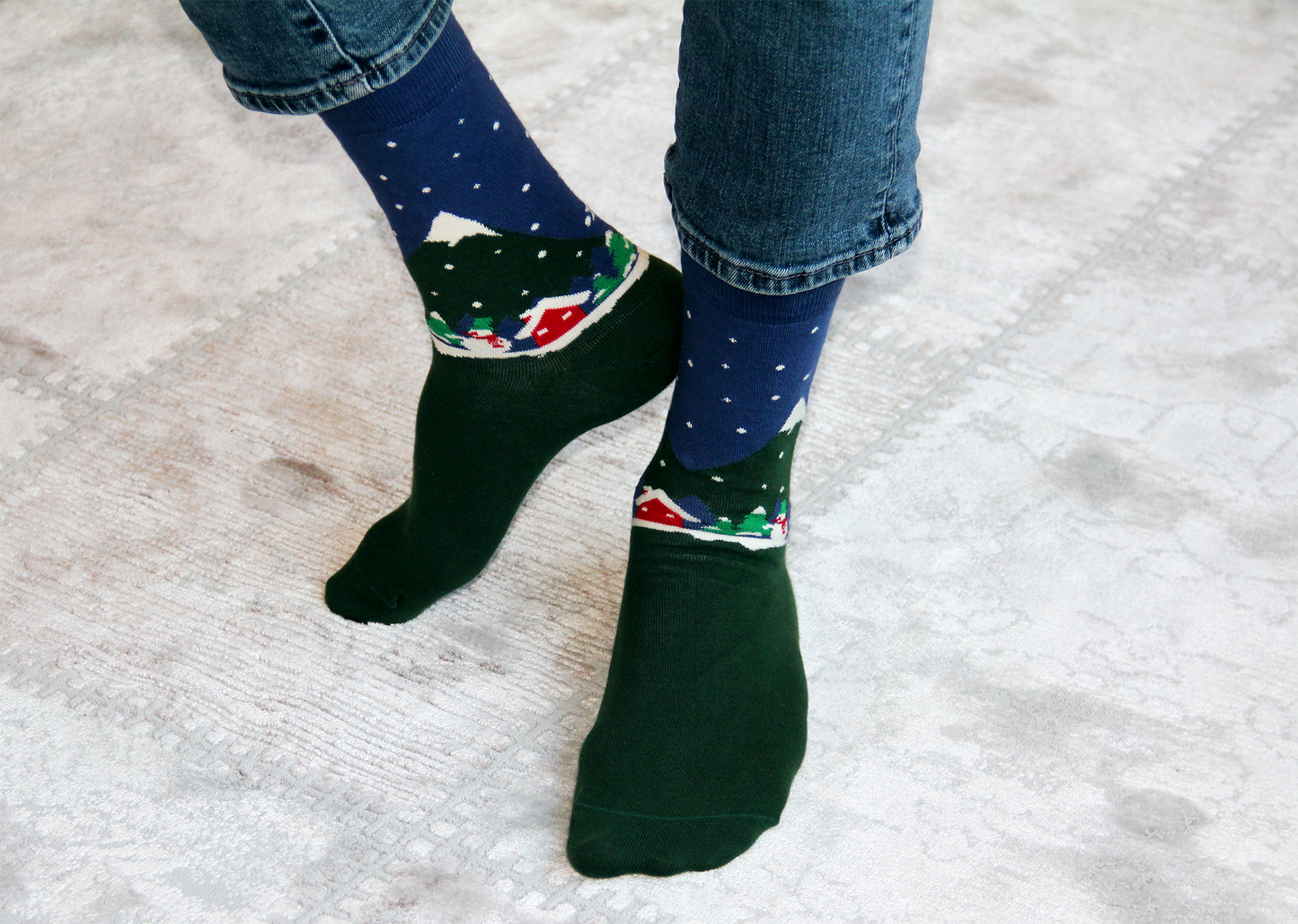
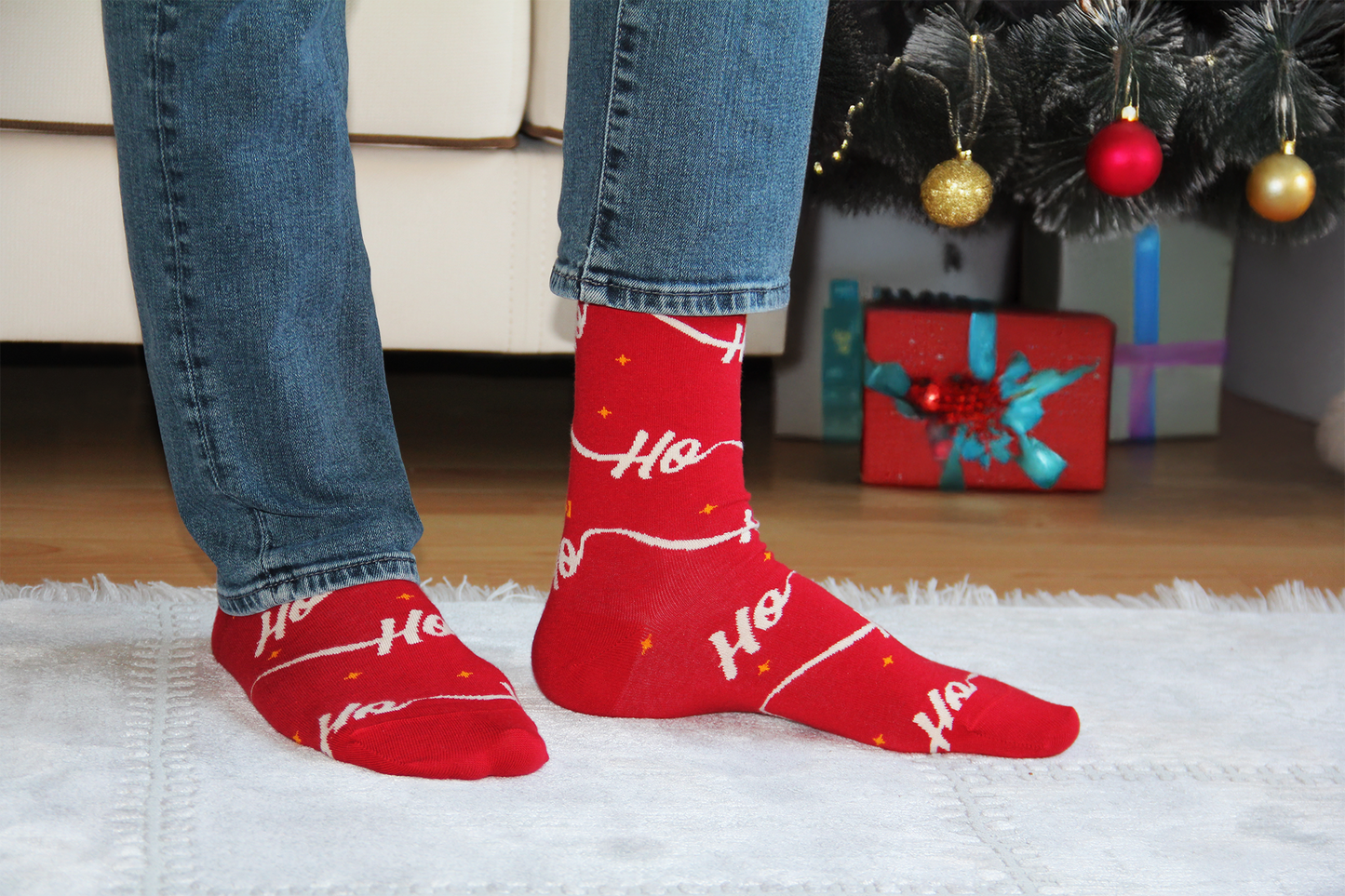
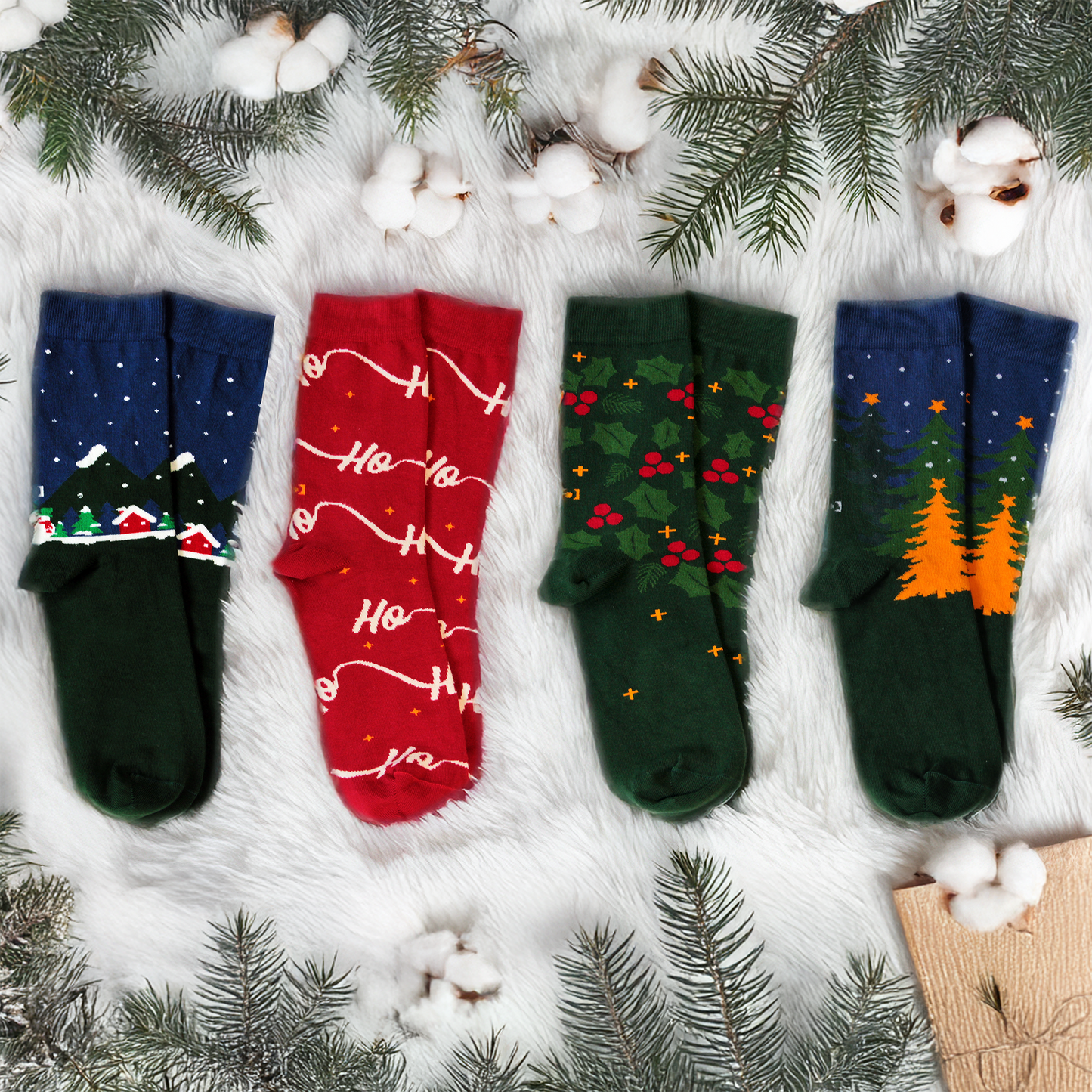
We design our socks and they're knitted in Turkey. Our Christmas designs are knitted, not printed: the snowy village, holly and "Ho Ho" lettering are all built into the knit using dyed yarns. The Christmas range is 80% combed cotton, 17% polyamide and 3% elastane, crew length, with a non-binding cuff. See the four designs in our Christmas socks collection.
What to look for in a well-made sock
- A knitted-in pattern rather than a print.
- A flat toe seam when you turn it inside out.
- A shaped heel and a cuff that springs back.
- A clear fibre mix on the label.
For the full list, see our guide to telling good quality socks.
Frequently asked questions
Are socks knitted or woven?
Knitted. Socks are made on circular knitting machines, which is what gives them their stretch.
Why do some socks have a seam across the toe?
The toe is closed after knitting. A machine-sewn toe leaves a ridge; a linked toe is flatter.
How are patterns put on socks?
On good socks, the pattern is knitted in using different coloured yarns (jacquard). Cheaper socks are sometimes printed after knitting, and prints can crack or fade.
What is boarding?
Heat-setting a sock on a foot-shaped board so it keeps its shape.